Title: Belukha (113)
Artist: R. Ohanyan
Year: 2024
Medium: Oil pastel on canvas
Dimensions: 60 × 100 cm / 23.6 × 39.4 in
Style: FractalCubism, Abstraction
Subject: Landscape
Framing: Plastic frame
Edition: Unique, 1 of 1
Series/Project: Codex of 1000, No. 113; Museum Without Walls
Final work: Yes
Technique: Multi-layered painting
Materials: Canvas on stretcher
Digital copies: Allowed by the artist
About This Artwork
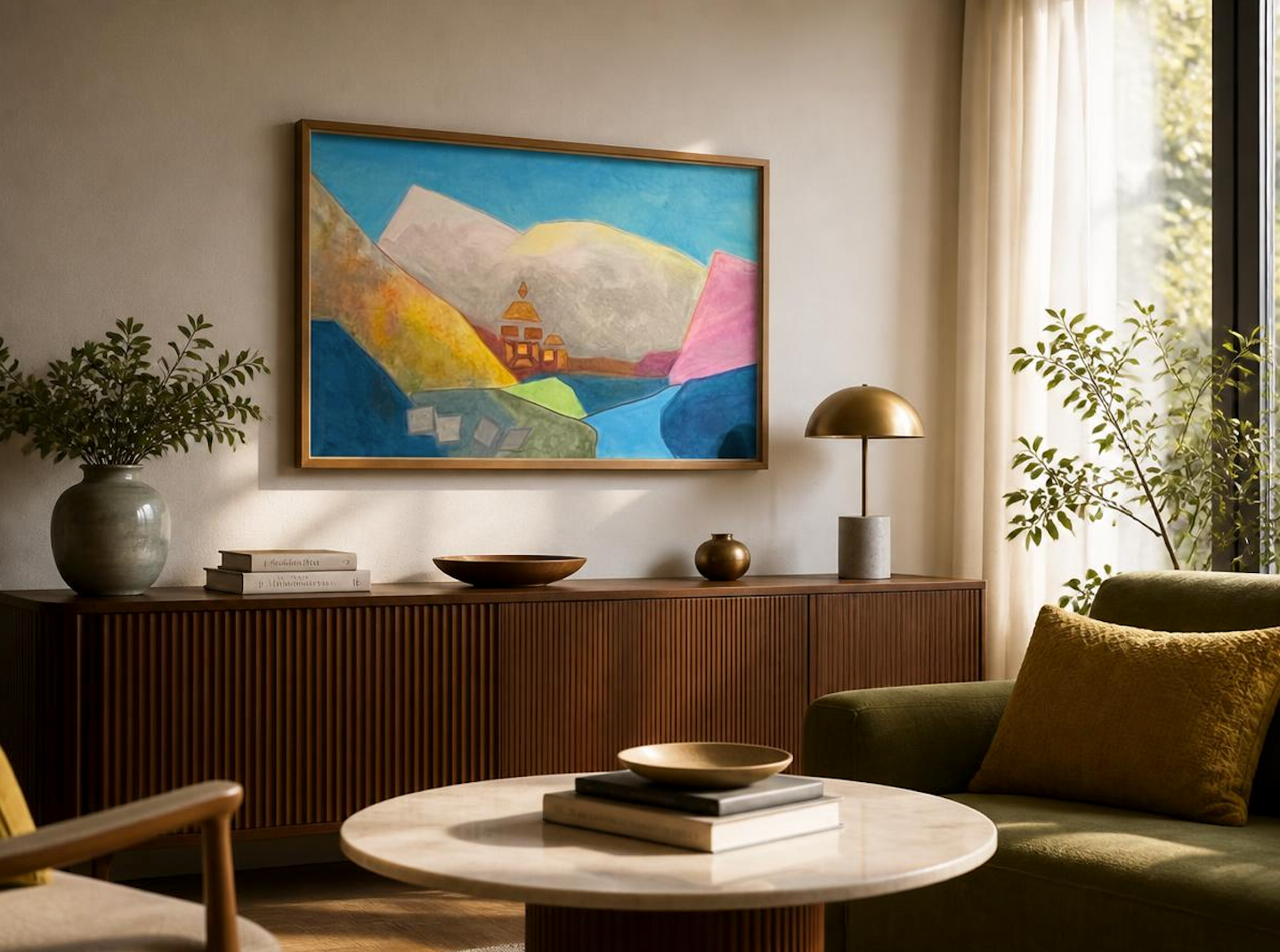
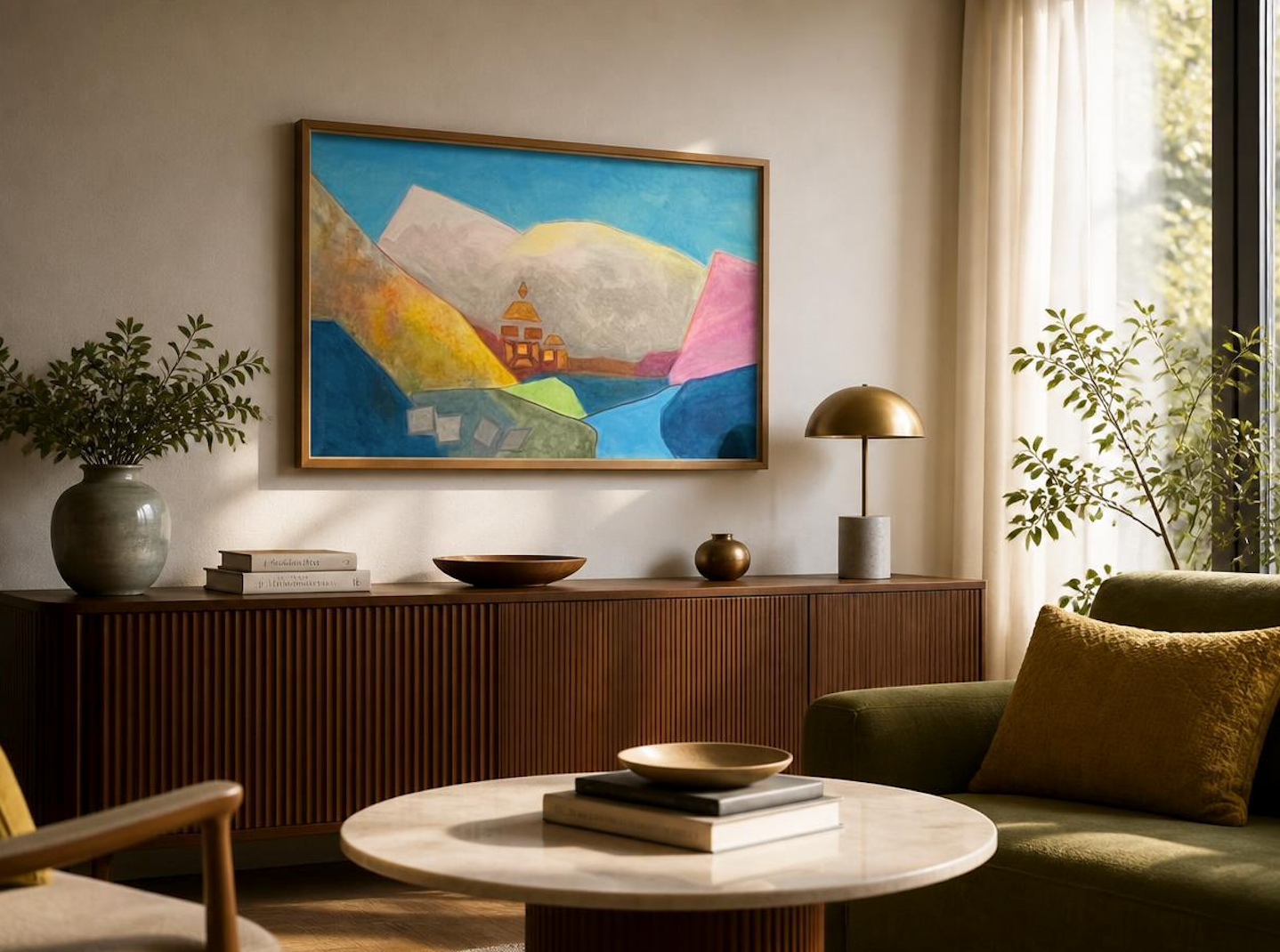
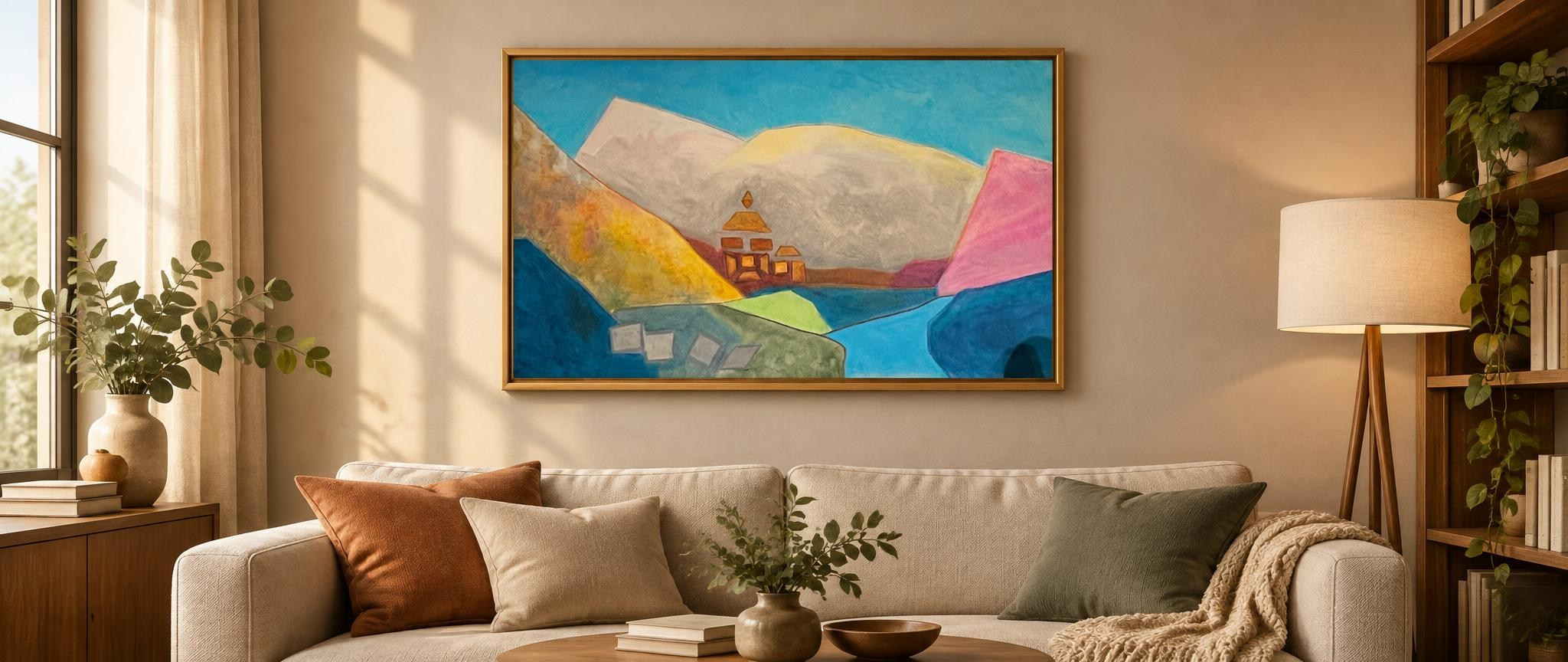
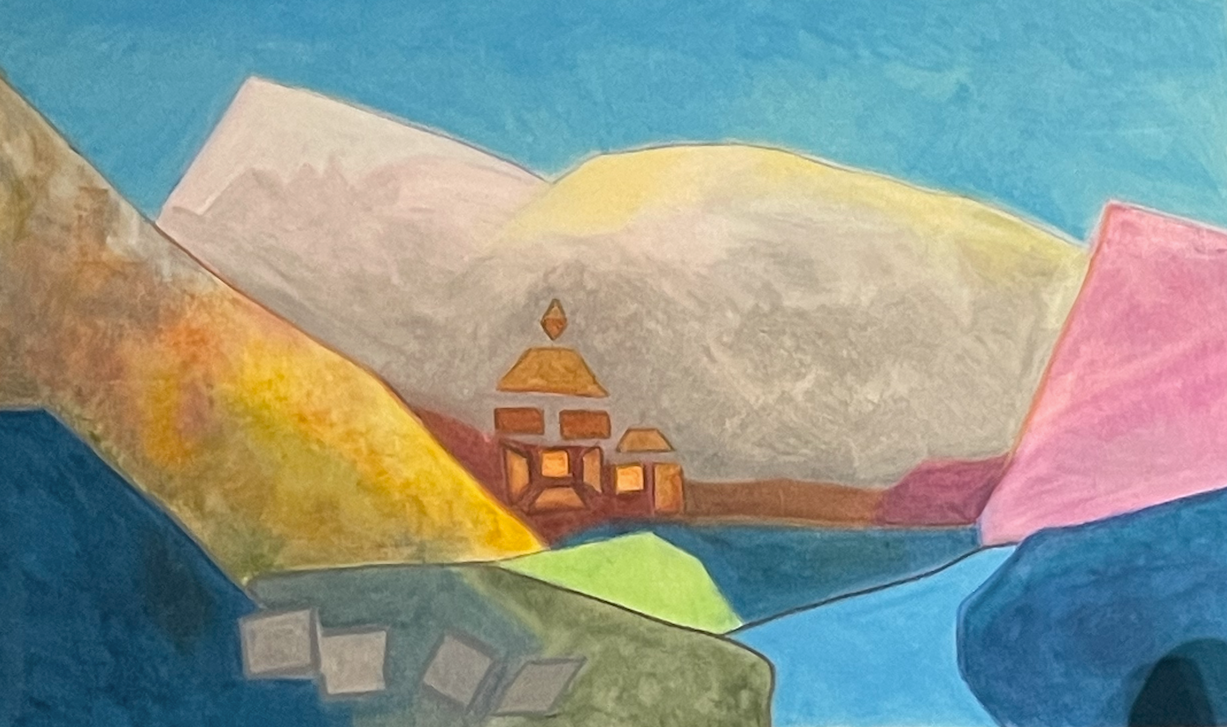
“Belukha (113)” is an original oil pastel painting on canvas created in 2024 by R. Ohanyan. It is the 113th work in the “Codex of 1000” cycle, a final piece, and part of the “Museum Without Walls” project. The work is the first painting created in the artist’s experimental style of FractalCubism — a direction combining fractal structures with cubist fragmentation. Executed in a multi-layered technique, the painting interprets a landscape through abstraction and symbolic form. It is a unique, one-of-a-kind artwork, framed in plastic. Digital copies of the work are permitted by the author. Size: 60 × 100 cm.
Tags
Belukha, oil pastel, canvas, landscape, abstraction, FractalCubism, fractal art, cubism, R. Ohanyan, Codex 1000, Museum Without Walls, unique, one of a kind, plastic frame, multi-layered painting, final work, experimental art, contemporary art, Russian artist.
The painting is built on the principle of dividing space into color-geometric layers. Each of them retains its independence, but is subordinated to a single rhythm. Mount Belukha is treated not as a specific landscape object, but as an archetype of the mountain. It is an axis connecting the earthly and the spiritual. Its mass is assembled from large, softly outlined fractal forms. They combine cold gray-white and warm ochre-yellow shades. This creates an effect of inner glow and at the same time emphasizes the multi-layered nature of the sacred space.
The central semantic accent becomes a monastery, inscribed into the body of the mountain. Its architectural forms are extremely conventional, almost symbolic. This brings the image closer to the iconographic tradition. The monastery does not so much stand at the foot as grow out of the mountain. Thus I visually confirm the idea of spiritual rootedness and the inseparability of faith and nature.
The color palette is built on the contrast of saturated local spots. The turquoise and blue planes of water and sky are contrasted with pink and green fragments of the slopes. These contrasts do not conflict, but create a sense of harmonic resonance. This is characteristic of fractal thinking, where each part repeats the whole at a different scale.
The pastel technique softens the geometry of forms. It gives the image a meditative fluidity. The lines are not rigid, but “breathing.” This takes the work away from rational cubism towards a contemplative, almost mystical experience of space.
This work can be interpreted as a visual mandala of Altai. Belukha acts as a center of power, and the monastery as a point of spiritual concentration. The painting does not depict a place, but conveys its inner state. It combines elements of landscape, symbol, and metaphysical experience into a single fractal system.
For me, “Belukha” is important as the beginning of a new stage. In it, I first applied the principles of “FractalCubism.” This is not just a landscape. It is a statement that form can be infinitely complex while remaining harmonious. It is a way of seeing the whole in each part and each part as a whole.